
Chinese brands grew 75% in Q1 2026. Five takeaways from the TransUnion data
Chinese vehicle brands grew sales by 75% year on year in Q1 2026. Here are five practical takeaways from TransUnion's mobility data for buyers, dealers, suppliers and workshops.
I write here in a personal capacity. This analysis reflects my own reading of publicly available data. It does not represent the position of the Retail Motor Industry Organisation or any of its constituent associations.
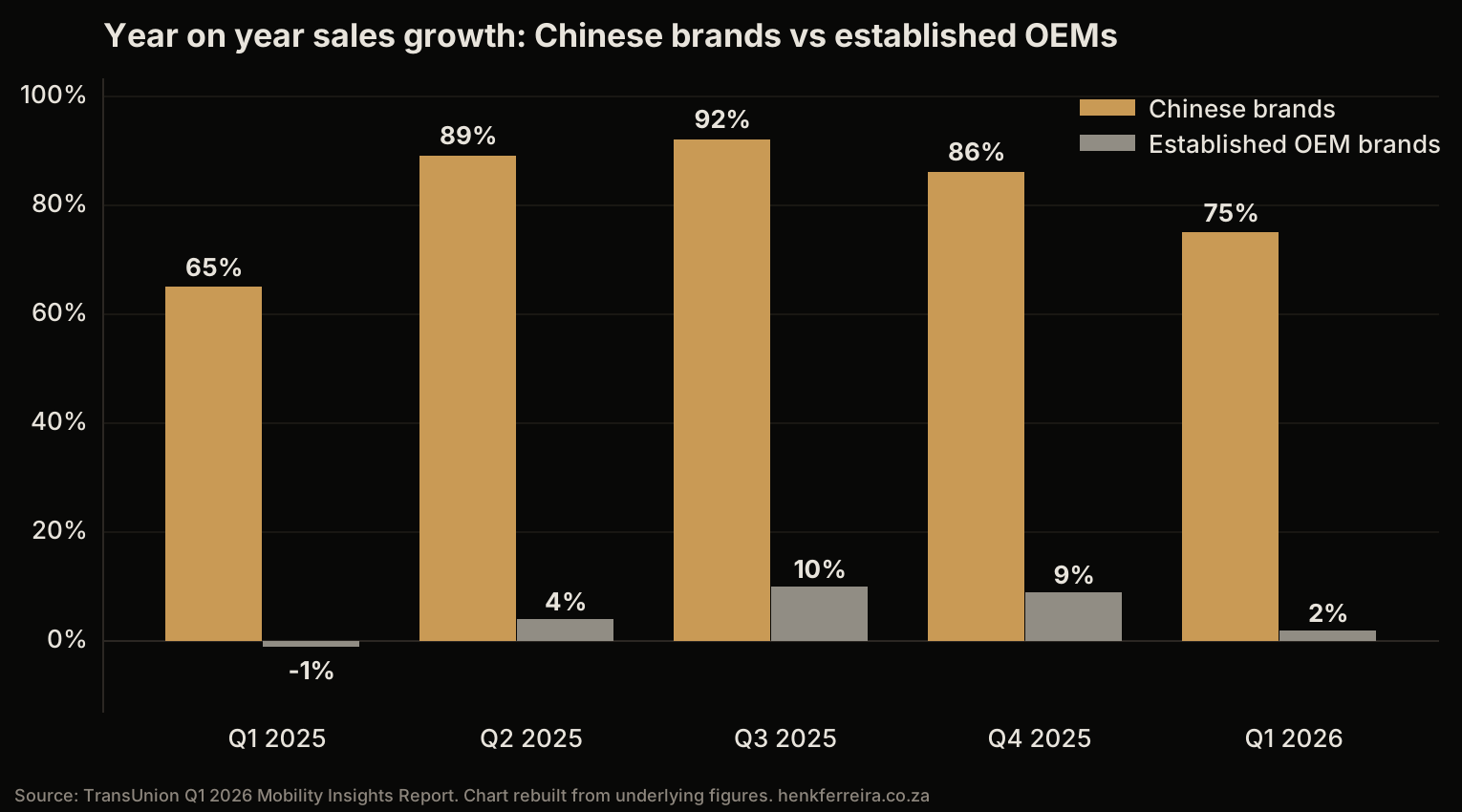
Chinese vehicle brands grew sales by 75% year on year in the first quarter of 2026, according to TransUnion's Q1 2026 Mobility Insights Report. The wider passenger and LCV market grew 12.7%. Established OEM brands grew 2%. Nearly one in five new vehicles sold in South Africa now comes from a Chinese brand.
Related operating context: SA Vehicle Sales May 2026: Reading the Market Beyond the Headlines – What July's Vehicle Sales Tell You About the South African Market – SA Vehicle Sales: Reading Beyond the Monthly Headline.
1. Growth at this scale changes the market's structure
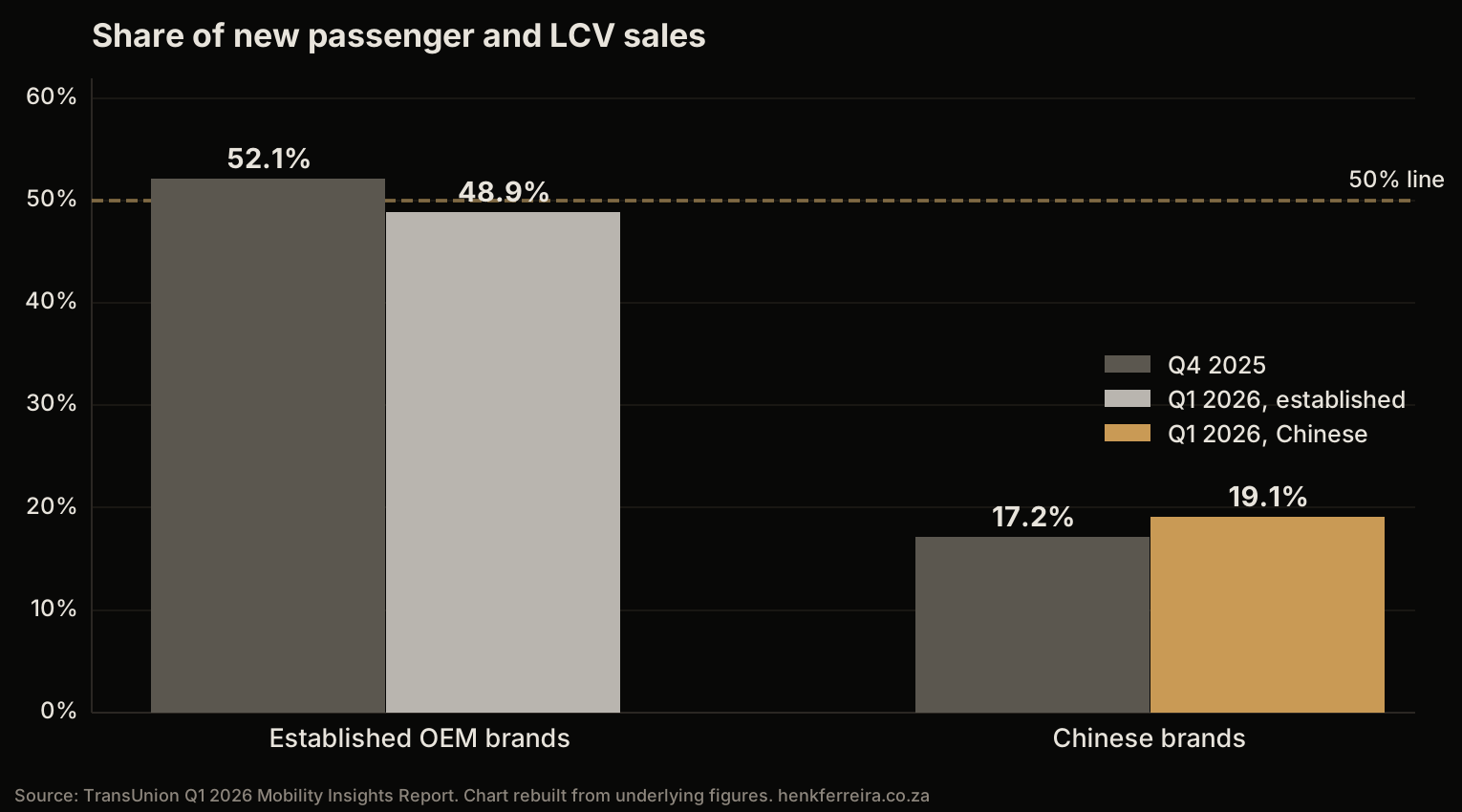
Chinese brand growth moderated from 86% in Q4 2025 to 75% in Q1 2026 and still ran at six times the pace of the overall market. Collective share moved above 19%. Established OEM share fell to 48.9%, below half of the market for the first time in the reported period. Jetour grew 249%, Foton 171% and Omoda/Jaecoo 79%. On a combined portfolio basis, Chery Group sold 16,094 units and now ranks among the top three automotive players. Toyota still leads outright at 23.5% share, with the Hilux the country's best-selling vehicle.
What this means: the vehicle parc lags sales by close to a decade. A franchise dealership for an established brand holds its aftersales base for years while unit share migrates, so used stock, service retention and F&I income carry more of the profit load through the transition. A retailer of Chinese brands faces the opposite pressure. Volume growth at this pace strains delivery, PDI and service capacity before it strains demand.
2. Rosslyn moves the story from imports to industry
Chery acquired Nissan's Rosslyn manufacturing assets, including the factory, land and stamping facility. The plant will be decommissioned and retrofitted over 12 to 18 months, with production targeted from 2027 across hybrids, PHEVs and BEVs. Export ambitions extend into Africa and Europe. The report notes localisation discussions with BYD, Suzuki and Proton as well.
The policy backdrop is a live discussion. South Africa applies a 25% import duty on built-up passenger vehicles. Government and industry are exploring localisation measures, including possible tariff adjustments. None of these are implemented. The outcome sits with policymakers.
What this means: from 2027 a Chinese OEM operates in South Africa with a plant, a payroll and export targets. Component suppliers, logistics providers and workshops in Gauteng gain a potential new customer base and should open those conversations early. Skills and apprenticeship pipelines need lead time to serve new production. Businesses supplying the outgoing operation need a transition plan in place before decommissioning starts.
3. Residual values move from assumption to measurement
Depreciation data settles arguments in this industry. Per the Cars.co.za Industry Report 2025, the Chery Tiggo 4 Pro and Haval Jolion depreciated under 27% over three years, ahead of the Hyundai Creta, Kia Seltos, Mazda CX-3 and Renault Duster. The Chery Tiggo 7 ranked third among family crossovers at roughly 25%, behind only the VW Tiguan and Toyota RAV4. The GWM Steed 5 matched the Isuzu D-Max and Mahindra Pik-Up at around 24%. The Toyota Corolla Cross still leads its segment at 15% and the Hilux holds its benchmark at 19%.
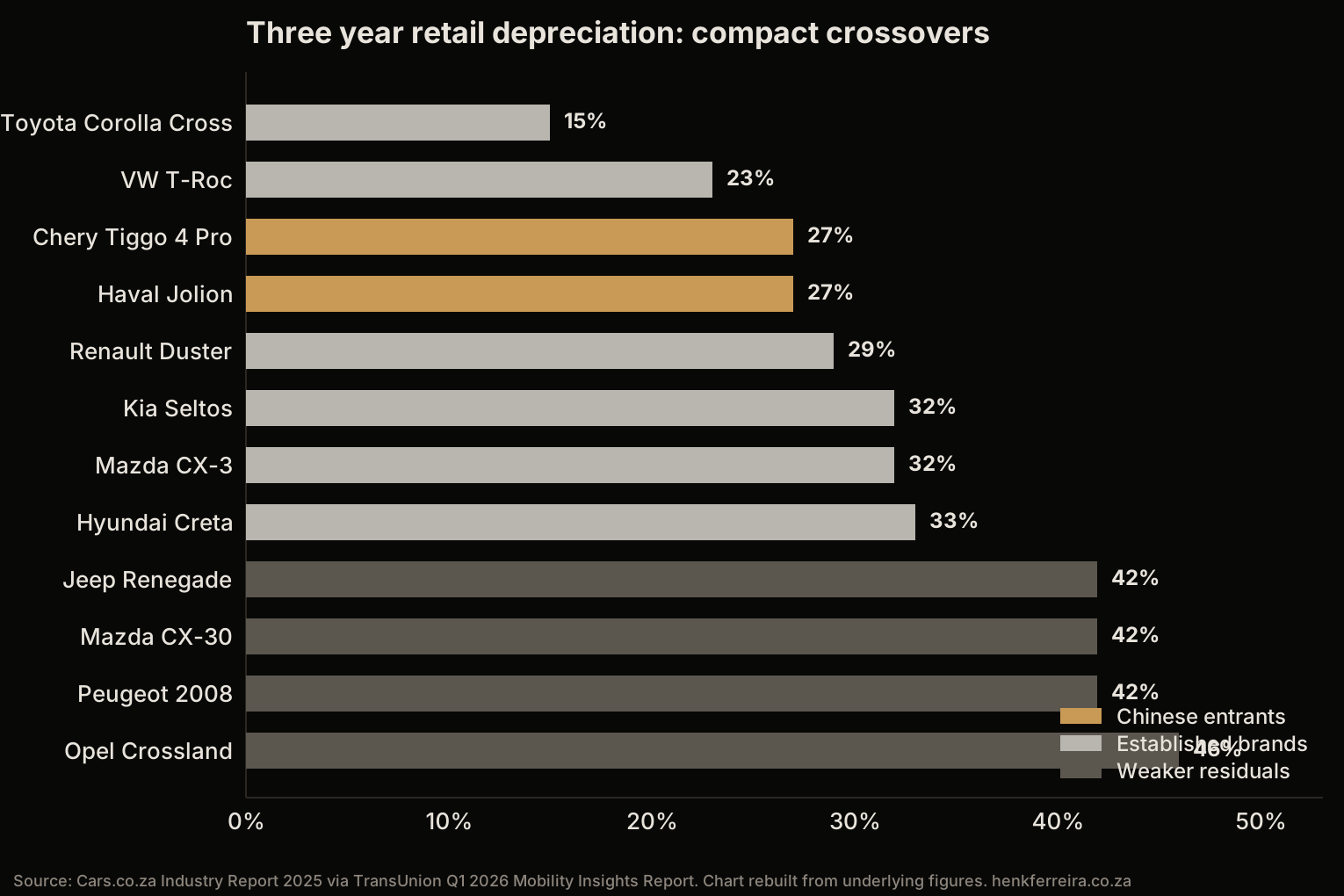
Three caveats deserve equal weight. First, the residual data covers a three-year window while finance terms now stretch to seven years. Performance at month 84 is unproven. Second, growing used supply introduces pricing pressure. Cars.co.za notes used Chinese crossovers struggle to sell if priced even marginally above market. Third, the result depends on which value you measure. The figures above reflect retail values. On trade-in values, TransUnion book data shows the Corolla Cross lost 23.2% over three years against 33.5% for the Jolion and 34.1% for the Tiggo 4. Trade-in is the number the dealer works with.
What this means: an F&I desk needs residual curves built per brand. Borrowed proxies from Korean brands misprice risk in both directions. A buyer comparing brands should ask for the projected trade-in value rather than the retail figure before signing a balloon deal.
4. Finance terms magnify every number above
Finance terms above 72 months now account for 56.4% of new vehicle originations, up from 41.7% in Q4 2021. More than half of new vehicle finance runs beyond six years. Terms of 1 to 60 months sit below 8%. WesBank reports 35% of new deals carry a balloon payment, averaging 37% of vehicle value.
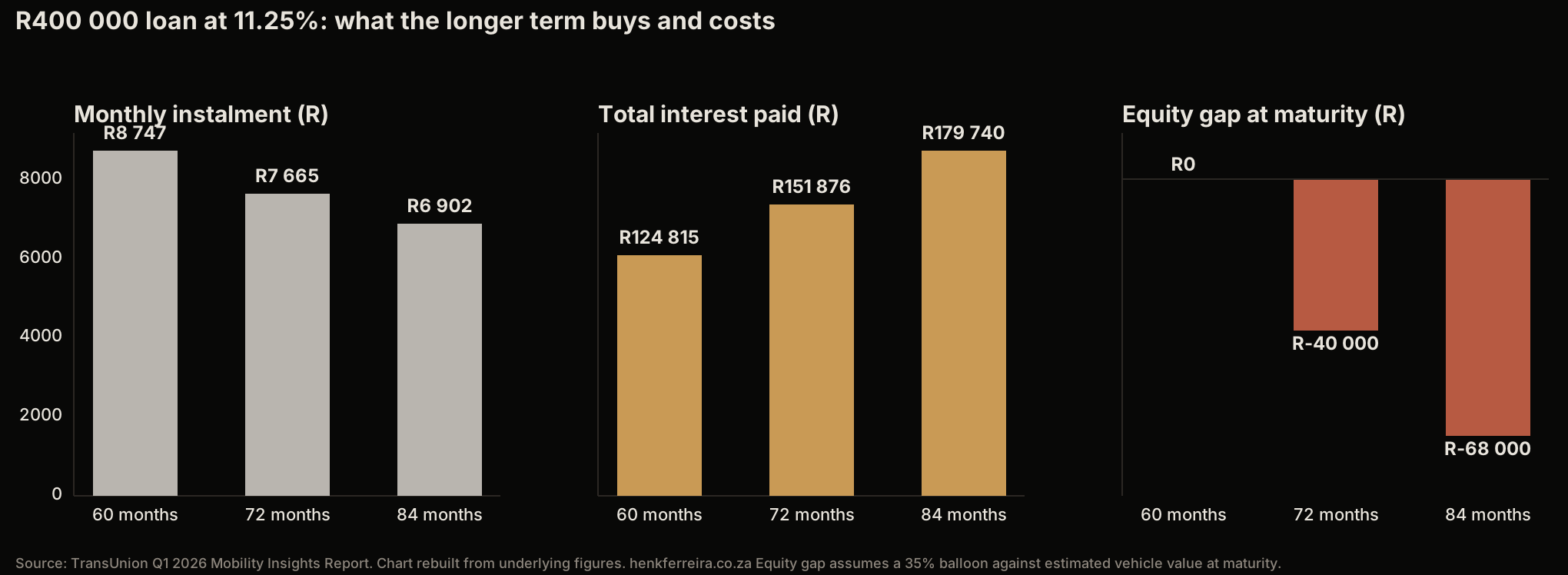
On a representative R400,000 loan at 11.25%, stretching from 60 to 84 months saves R1,845 a month and adds R54,925 in interest over the life of the loan. At 84 months, the report estimates vehicle value falls roughly R68,000 short of the outstanding balloon at maturity. The buyer owes more than the asset is worth at the exact moment a trade-in becomes attractive.
What this means: a buyer has three questions to ask before signing. What is the total interest over the full term. What is the balloon amount and what is the plan to settle it. What will the vehicle trade for at maturity. For a dealership, the trade-in cycle stretches with the terms. A customer in negative equity at month 84 returns to the showroom later and under strain, while a customer who exits a deal cleanly returns sooner and buys again. Deal structure now shapes repeat business.
5. Demand held up in Q1. The report expects a harder second half
Passenger vehicle sales reached 114,517 units in Q1 2026, marginally above Q4 2025. The BER/RMB dealer confidence index rose nine points to 67, above the post-pandemic peak of 2021. The survey ran from 12 to 23 February, before the fuel shock. Inland 93-octane petrol passed R23 a litre in April, a 15.2% monthly jump and the fifth-largest single-month increase in 50 years of Stats SA records. Inflation accelerated to 4.0%. The report expects affordability and operating costs to weigh on demand through the second half of 2026.
What this means: the February confidence reading predates the fuel move, so the Q2 reading carries more signal than usual. Stock and cost discipline matter more in a softening quarter than in a rising one. A household weighing a purchase should run the monthly numbers at current fuel prices rather than at the prices of the past year. At R23 a litre, a vehicle covering 1,500km a month at 8 litres per 100km costs above R2,760 in fuel alone.
Closing
The Q1 data describes a market in structural transition. Buyers now weigh total ownership cost against the instalment. Dealers now manage longer finance cycles and new residual risk. Workshops and suppliers now plan for a changed industrial base. The September report will show whether the fuel shock bent the trajectory. Reading these numbers early buys time to adjust.
Sources
- TransUnion Q1 2026 Mobility Insights Report
- Naamsa vehicle sales and export data
- WesBank, balloon payment uptake release
- Cars.co.za Industry Report 2025
- Statistics South Africa, CPI and fuel price data
Personal views only. Content does not represent any employer, partner, client, association or organisation. This article is general commentary and education, not medical, legal, employment, financial or professional advice.