What I Learned from The Life-Changing Art of Self-Brain Surgery
What I have been learning from Self-Brain Surgery about directing your own mental patterns, and why deliberate practice matters for doing demanding work well.
A friend shared a book with me recently. The Life-Changing Art of Self-Brain Surgery by Dr W. Lee Warren, MD. She has been working through it with me, and she has been sharing the notes that resonated.
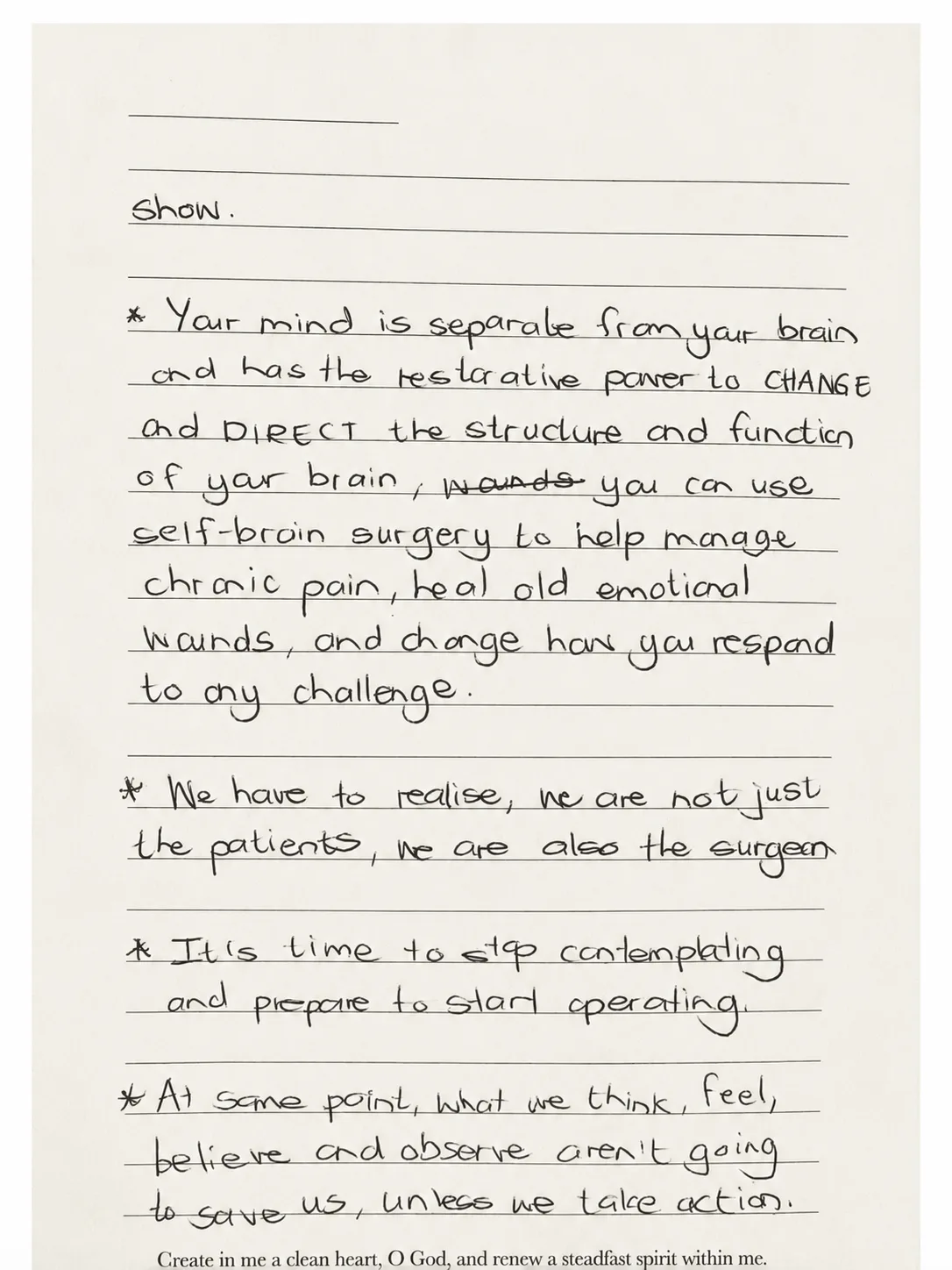
Notes from a friend working through the framework with me
The premise is direct. Your brain changes constantly whether you choose it or not. Every thought you entertain is either helping or hurting the structure you are living with. The question is whether you direct that change or let it run on default.
I am not claiming to have mastered this. I am reading, testing and adjusting. But the framework has already shifted how I think about my own habits of attention and response.
Here is what I have taken from it so far.
Related operating context: Why I Started This Page – Mental Health Is a Leadership Issue, and Companies Need to Stop Pretending Otherwise.
The mind is not the brain
This was the first idea that stuck. Your mind and your brain are not the same thing. The mind can direct the brain. Neuroplasticity does not need your permission, but it can come under your control.
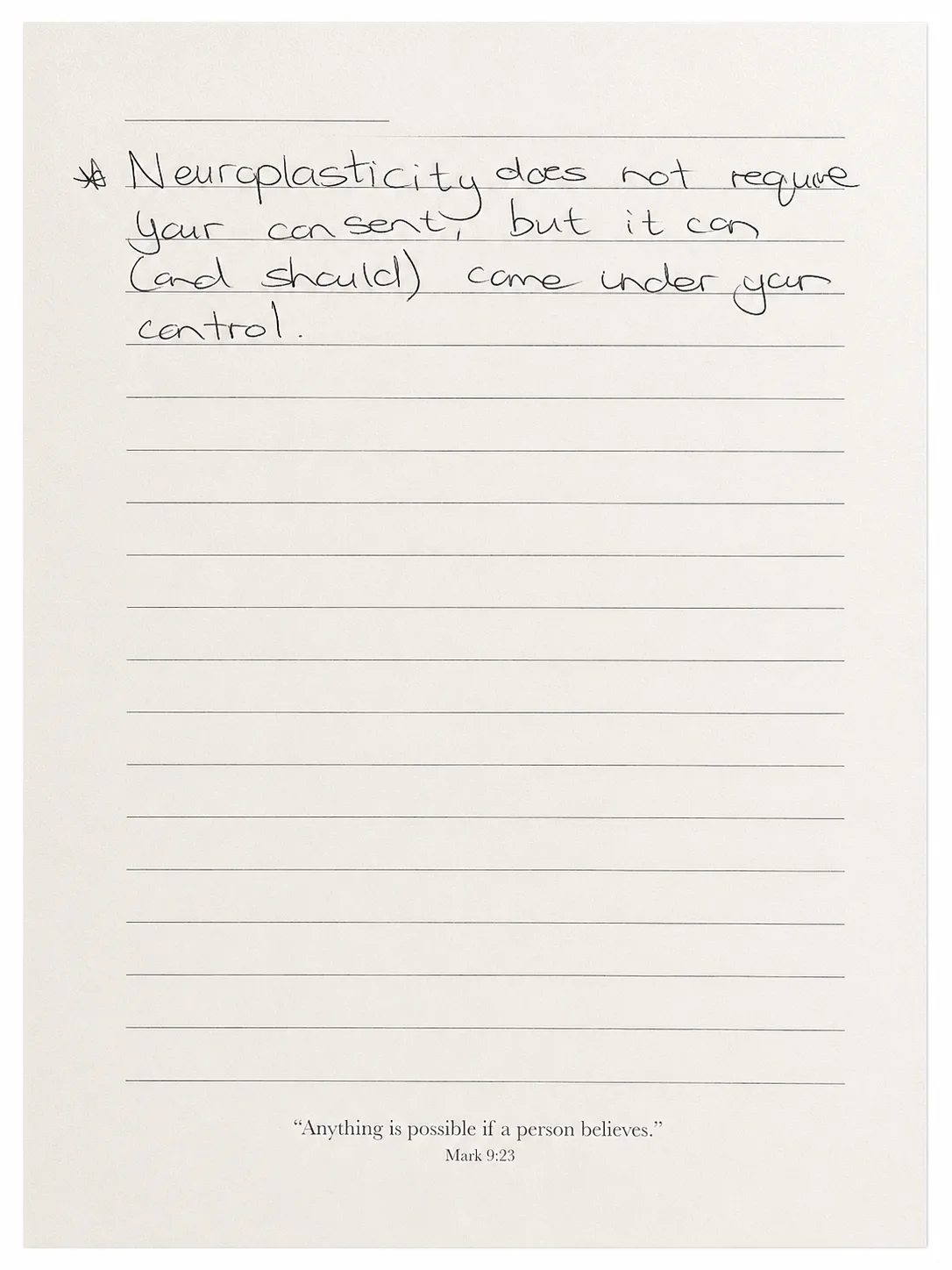
Neuroplasticity is always happening. The question is who directs it.
That reframes a lot. I had treated my own mental patterns as fixed. Tiredness, distraction, impatience, the quick negative read on a situation. I saw them as states that happened to me. The book treats them as procedures I have been running on repeat, procedures I can choose to rewrite.
You are already the surgeon
One of my friend's notes says it plainly. We are not just the patients. We are also the surgeon.
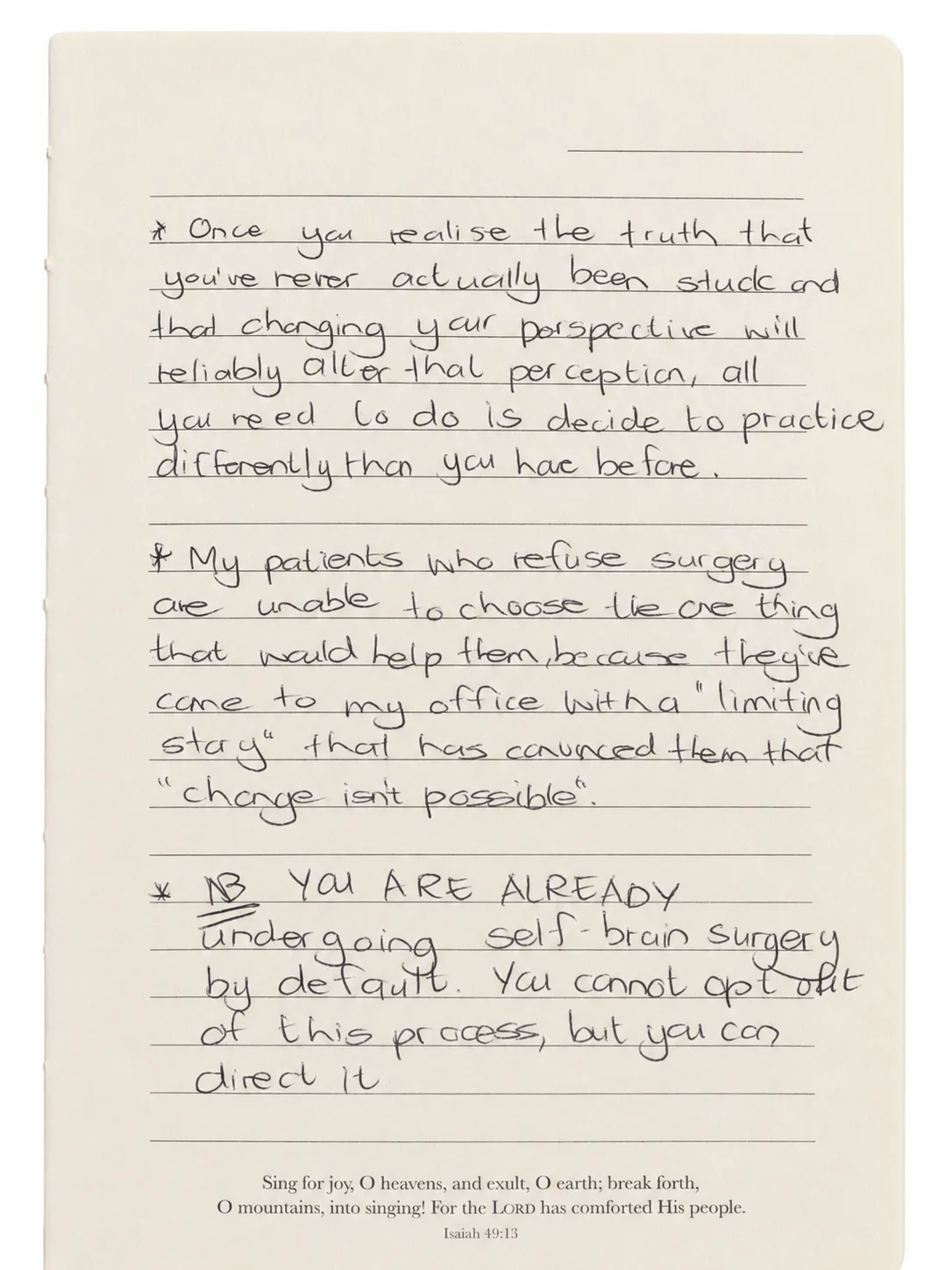
You cannot opt out. You can only choose whether to direct the process.
That means responsibility. It also means agency. You do not need to wait for perfect conditions or complete understanding before you start making changes. You are already operating. The only question is whether you are doing it deliberately or letting old patterns run unchecked.
The ten commandments as operating principles
The book structures its guidance as ten commandments. I will not list them all, but a few have been useful anchors for me.
Relentlessly refuse to participate in your own demise. That sounds dramatic until you notice how often you feed a thought that makes you smaller, more reactive, less able to think clearly.
Feelings are not facts. They are chemical events in the brain. That does not dismiss them. It just means you do not have to treat every feeling as a true signal about reality.
Most automatic thoughts are untrue. The brain generates thoughts constantly. Many of them are noise. The practice is to notice them, test them, and choose which ones to keep.
Your mind is in charge of your brain. Not the other way around. That takes repetition to believe, and more repetition to live.
The operating room
The book moves from principles to practice. The Whole-System Scan. The Thought Biopsy. Basic self-brain surgery. These are structured ways to examine what you are thinking, identify the patterns that serve you and the ones that do not, and replace them deliberately.
I am early in this. I have done the scan a few times. I have started catching myself in the middle of automatic responses I would rather not reinforce. I am not consistent yet. But I am operating more deliberately than I was.
Neuroscience, prayer and purpose
My friend noted something I found useful. The book does not dismiss therapy or medicine. It says they have their place. But the ultimate power to change rests within each of us.
The author also brings in prayer, gratitude and purpose as tools that neuroscience increasingly validates. I am not going to pretend I have a strong practice in all three. But I have started paying attention to what I feed my mind, and that alone has been worth the reading.
What this means for work
The connection to demanding work is simple. The quality of your decisions depends on the quality of your attention. The quality of your attention depends on the patterns you have built.
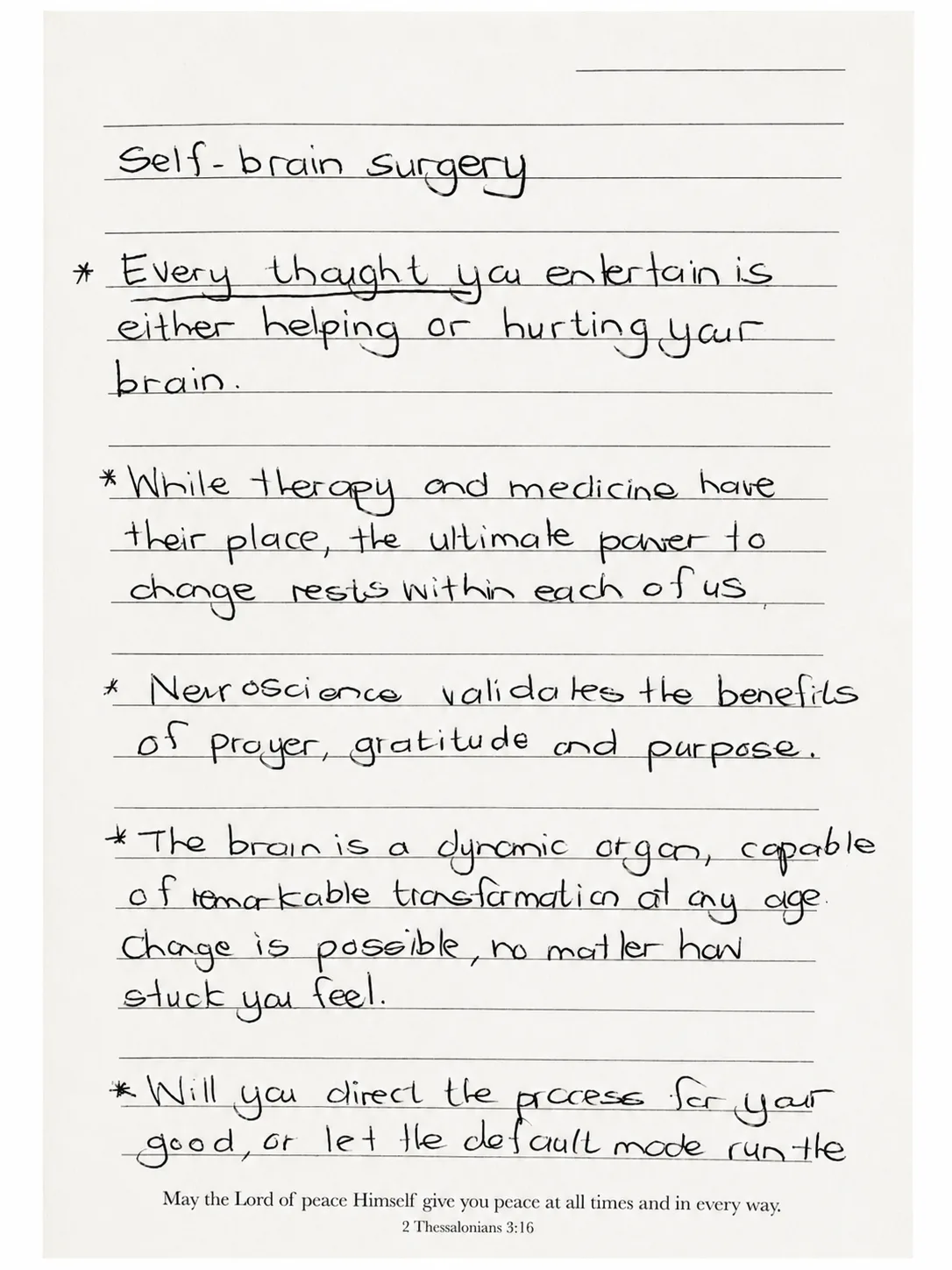
The full framework: every thought helps or hurts.
If you are running on default, you will reach for the familiar answer when you are tired. You will simplify problems without realising you are doing it. You will react instead of respond.
Deliberate self-brain surgery means catching those patterns before they cost you something important. It means building the mental procedures you actually want to run.
I am still learning. Still practising. Still catching myself in old habits. But I am operating more deliberately now, and that is the point.
Source note
This article draws on Dr W. Lee Warren, MD, The Life-Changing Art of Self-Brain Surgery, and on notes and discussions shared by a friend. The framework reflects the author's principles; the application and interpretation are my own.
Personal views only. Content does not represent any employer, partner, client, association or organisation. This article is general commentary and education, not medical or professional advice.
Personal views only. Content does not represent any employer, partner, client, association or organisation. This article is general commentary and education, not medical or professional advice.